Wildfire is part of life near the Boulder foothills. If you live in North Boulder, the good news is that a few focused projects close to your home can sharply lower your risk. The highest‑impact work happens within about 100 feet of the structure, often called the Home Ignition Zone. In this guide, you will learn what to do first, how to adapt for slopes and decks, and where to find local programs that can help. Let’s dive in.
Why defensible space matters in North Boulder
North Boulder sits along the Front Range foothills where grass, oak, and conifer fuels meet neighborhoods. Local agencies treat wildfire as a recurring hazard, and your property’s near‑home conditions are a major factor in how it performs during a fire. The most important work happens within the Home Ignition Zone, especially the first few feet next to the house. You will get the most risk reduction by starting closest to the structure and moving outward.
The Home Ignition Zone
The Home Ignition Zone is the area within roughly 0 to 100 feet of your home. Local experts recommend creating a noncombustible 0 to 5‑foot buffer, then reducing and spacing vegetation out to 30 feet, and finally managing overall fuel levels farther out. For an overview of best practices and local resources, see the county program’s guide to Wildfire mitigation basics.
Ember risk near homes
A large share of home ignitions in wildfires start with embers landing in receptive fuel. That can be leaves in a gutter, dry mulch by the foundation, or debris under a deck. State and national fire investigations underscore this ember threat, which is why the near‑home zone is the top priority and vents need ember screening. Learn more about ember behavior from CAL FIRE’s wildfire building guidance.
The three defensible space zones
Design your defensible space in simple zones. Work from the house outward.
Zone 1: 0 to 5 feet noncombustible
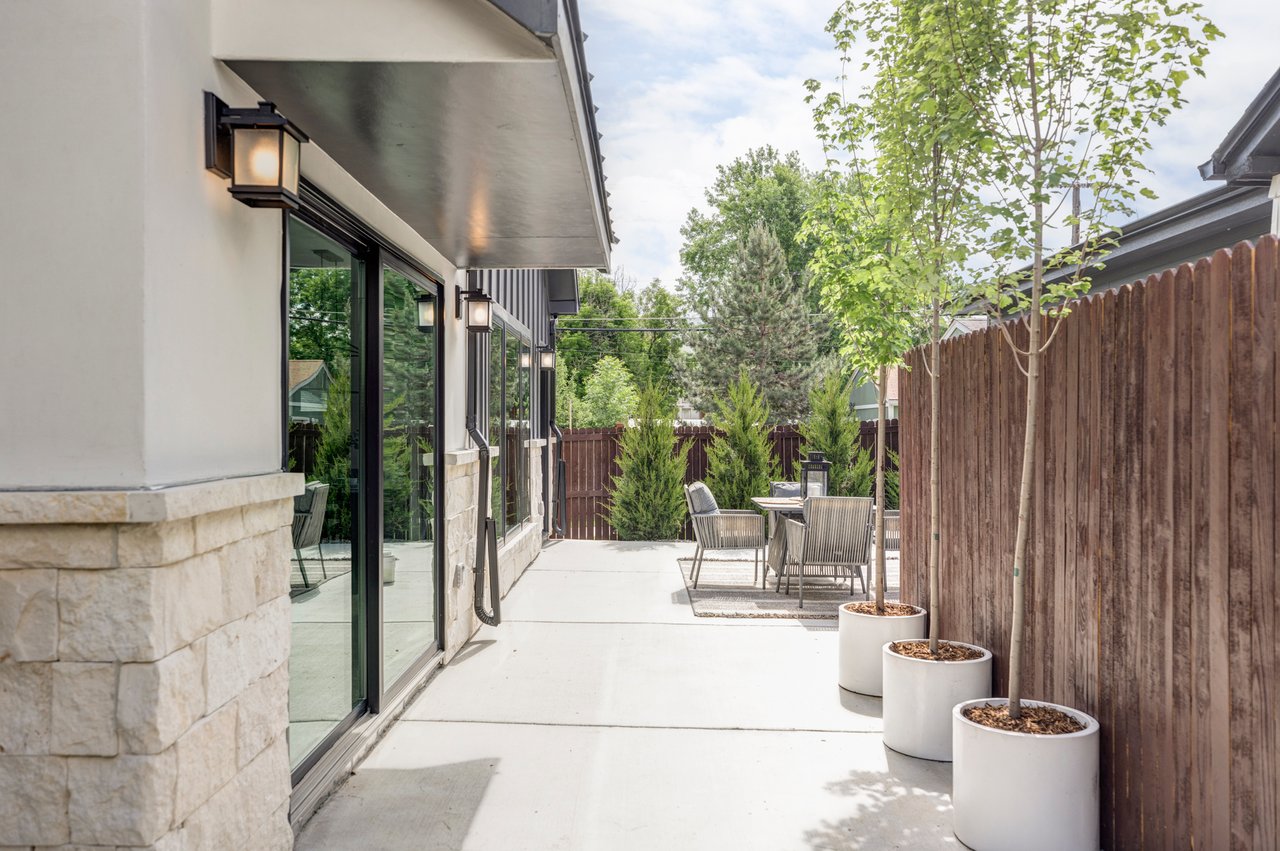
Create a hardscape buffer next to the home using gravel, pavers, or concrete. Keep this strip clear of bark mulch, wood piles, and shrubs that can catch embers. This is the single highest‑value project for North Boulder homes. See Colorado guidance on the immediate zone from the Colorado State Forest Service.
Zone 2: 5 to 30 feet
Thin and separate plants to break up continuous fuels. Keep grasses trimmed during fire season. Prune lower tree branches to reduce ladder fuels and maintain spacing so fire is less likely to climb or crown. Group plantings in well‑watered islands separated by paths or gravel.
Zone 3: 30 to 100+ feet
Lower the overall fuel load to reduce fire intensity before it reaches the home. Focus on removing dead material and selectively thinning dense areas. On larger lots, continue spacing and pruning out beyond 100 feet where practical.
Adjust for slopes and attachments
If your home sits below a slope or faces strong prevailing winds, increase your zone distances. Fire moves faster uphill and can throw embers ahead of the flame front. Pay special attention to attachments where embers collect, such as decks, fences that connect to the house, and under‑eave areas. Boulder County’s code highlights measures like a noncombustible buffer under decks and replacing the first few feet of fencing near the structure with noncombustible materials. Review the county’s mitigation and code requirements if you plan to build or renovate.
Step‑by‑step plan you can start now
Use this sequence to get the greatest return on your time and budget.
- Roof and gutters
- Clear leaves and needles from roofs, valleys, and gutters. Repair missing shingles or tiles.
- Create the 0 to 5‑foot buffer
- Replace combustible mulch with gravel or pavers. Keep plants sparse, low, and well‑watered in this strip.
- Prune and thin from 5 to 30 feet
- Raise tree canopies by pruning lower branches. Remove ladder fuels like small conifers under larger trees. Space shrubs and trees so crowns are not touching.
- Replace high‑risk plants near the home
- Junipers and resinous conifers are very combustible. Swap them for low‑flammability species and keep any remaining plants well‑maintained.
- Decks and under‑deck areas
- Remove anything stored under decks. Enclose or screen with noncombustible materials and keep a clear, rock‑covered footprint beneath.
- Vents and openings
- Install 1/8‑inch metal mesh on attic and foundation vents or use ember‑resistant vents. Check soffits for gaps.
- Fences and gates
- Where a fence meets the house, use a noncombustible section for the first few feet or leave a separation gap. Keep vegetation away from fence lines.
Smart planting near the home
Landscaping can be beautiful and strategic. Choose low‑flammability plants near the house and avoid dense, oily shrubs next to siding or windows. Group plantings in small, irrigated islands with hardscape breaks. For plant ideas suited to Colorado’s climate, consult CSU Extension’s Firewise plant materials list.
Maintenance calendar for fire season
Routine care keeps your defensible space effective.
- Early spring: Clean roofs and gutters, check vents and screens, refresh gravel in the 0 to 5‑foot zone.
- Late spring to summer: Mow and trim grasses as they grow. Prune new branches in Zones 2 and 3 as needed.
- Fall: Remove leaf litter, reassess spacing, and clear under decks and along fences.
- Year‑round after wind events: Recheck gutters, decks, and corners where debris collects.
Local rules, services, and incentives
Knowing who oversees your address matters in North Boulder.
- Boulder County code and permits: Many new builds, additions, and certain decks must meet defensible space standards or obtain Wildfire Partners certification. Start with the county’s mitigation and code requirements.
- City of Boulder assessments: If you are inside city limits, Boulder Fire‑Rescue offers detailed home assessments and education. See the City’s community outreach and assessments.
- Community chipping: Neighborhoods can apply for the countywide Wildfire Partners chipping program, which provides contractor chipping and disposal during the season.
- Rebates: Boulder County has offered time‑limited rebate programs for specific mitigation actions, such as ember‑resistant vents, noncombustible fencing sections, and removing high‑risk shrubs near the home. Check the latest rebate announcement for current eligibility and deadlines. Program details change each year.
Budget, insurance, and resale value
Many effective upgrades are affordable compared to full retrofits. A national study estimates common home‑hardening measures often range from about 2,000 to 15,000 dollars, while comprehensive projects can reach much higher depending on scope. See the cost overview from Headwaters Economics. Document your work with photos and receipts. Post‑fire analyses by IBHS show mitigation improves a home’s chance of performing better in a wildfire, and documented work may help when discussing coverage with your insurer. Learn more from IBHS’s findings.
Ready to take the next step?
If you are planning work on a North Boulder property or preparing to sell, a focused defensible space plan can protect your home and support long‑term value. For tailored guidance on which projects deliver the best return before you list or buy, connect with Katherine Lillydahl.
FAQs
How far out should I create defensible space around a North Boulder home?
- Use a zone approach: 0 to 5 feet noncombustible next to the house, 5 to 30 feet thinned and well‑spaced, and 30 to 100+ feet with reduced fuel loads. Increase distances on steep slopes.
Do City of Boulder and Boulder County rules differ for defensible space?
- Yes. City of Boulder offers its own home assessments and education, while Boulder County enforces mitigation requirements tied to certain permits and runs countywide programs like Wildfire Partners. Your address determines which rules and services apply.
Which plants are better near the house in Colorado wildfire areas?
- Choose low‑flammability plants in the 0 to 30‑foot area, keep them small and well‑spaced, and separate groups with gravel or paths. Avoid dense, resinous shrubs like junipers next to siding.
Are there rebates or chipping programs for North Boulder homeowners?
- Boulder County has offered seasonal community chipping and time‑limited rebates for specific mitigation actions. Check current program pages for dates, eligibility, and how to apply.
Will defensible space help with homeowners insurance on a North Boulder property?
- Mitigation and home‑hardening can make a property more attractive to insurers and may help with coverage conversations, but availability and pricing depend on the broader market and each company’s underwriting. Keep detailed records of your work.