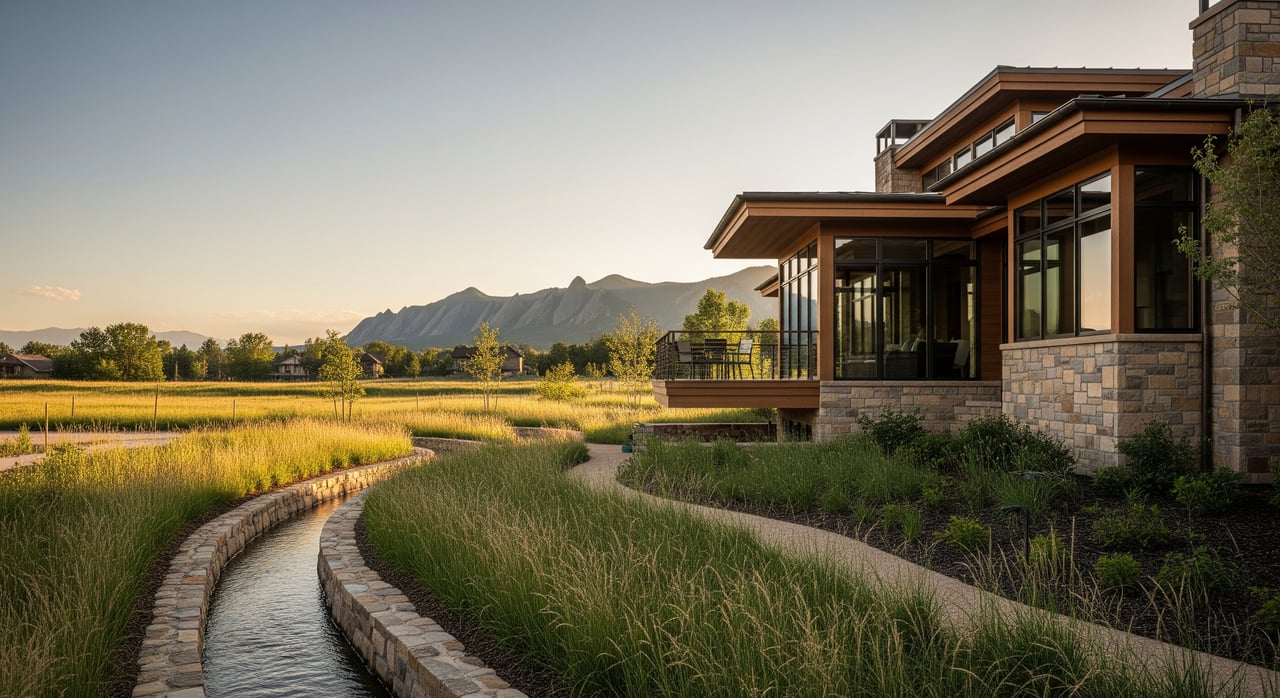
You notice the lush greenbelts and shimmering water features around Boulder Country Club and wonder where the property lines really are. If you plan to buy or sell in Gunbarrel, easements tied to ditches and open space can raise fair questions about access, improvements and value. The good news: most of this is manageable with the right steps. This guide simplifies what these easements are, how they work here, and the practical moves to protect your plans. Let’s dive in.
Ditch vs. open-space easements
Ditch or irrigation easements
A ditch easement is a legal right that lets a water-right holder or ditch company access land to operate and maintain a ditch, pipeline or related works. Under Colorado law, those rights include reasonable entry for inspection, cleaning, repair and improvements tied to ditch purposes. See the state’s core statute on the extent of ditch rights-of-way.
Open-space or conservation easements
An open-space or conservation easement is a recorded restriction that limits development to preserve scenic, habitat or recreation values. Around Gunbarrel, Boulder County Parks & Open Space manages public open space and nearby conservation easements, including the Twin Lakes area. Learn about the local setting at Twin Lakes Open Space.
Why this matters near Boulder Country Club
Gunbarrel’s neighborhoods were built alongside historic agricultural corridors and small reservoirs. Some lots sit next to or include older ditch routes, and some of those corridors parallel public open space like Twin Lakes. Rights-of-way are often narrow yet enforceable, and the county and ditch operators may coordinate maintenance in shared corridors.
What you can and cannot do
Access and maintenance
Ditch companies can reasonably enter a burdened property to inspect, maintain or repair the facility. They may remove obstructions that interfere with ditch operations, which can include vegetation or fences in the corridor. For a practical overview, see this summary of ditch maintenance practices.
Improvements and setbacks
Building over a ditch easement is usually restricted, and structures or fences in the corridor can be subject to removal. If you plan an addition, expect a title company or lender to ask for a survey that shows easements and improvements. For context on surveying and easements, review this guide to title and survey coordination.
How easements affect your transaction
Title, survey and underwriting
Recorded easements appear as exceptions in your title commitment, and unplotted easements often trigger survey requirements. An ALTA/NSPS survey can help remove general survey exceptions and clarify where you can build. See how easements show up in commitments in this overview of title exceptions and surveys.
Disclosure duties for sellers and brokers
Colorado sellers must disclose known adverse material facts, which includes known easements and ditch activity that materially affect the property. Standard forms and guidance come from the Colorado Real Estate Commission. For more on disclosure obligations, see this summary of adverse material facts and latent defects.
Floodplains and drainage
Irrigation corridors and nearby reservoirs can overlap with drainage or floodplain areas. Before you waive objections, check the county parcel tools for flood status and recorded documents. Start with the Boulder County property search help.
A step-by-step due diligence plan
- Pull the preliminary title commitment and read Schedule B to identify all recorded easements and document numbers.
- Retrieve the actual recorded easement deeds from the Boulder County Clerk & Recorder using the parcel tools.
- Order an ALTA/NSPS land title survey that shows easements relative to improvements if you plan construction or if the title underwriter requires it.
- Call the ditch company named in the records to confirm maintenance access, typical timing, and any assessments or charges.
- Confirm whether a conservation easement affects the subject or an adjacent parcel and review any permitted-use terms.
- Check floodplain status on the county parcel page, and contact the county flood and permit team if anything is unclear.
- Ensure the Seller’s Property Disclosure is complete and updated if new information surfaces before closing.
Quick checklist for owners
- Confirm the recorded document number, holder and width of any easement.
- Map the easement on a current survey before planning additions or fences.
- Ask the ditch operator about seasonal maintenance equipment and access points.
- Verify any assessments or shareholder obligations tied to ditch operations.
- If a conservation easement exists, understand review and consent requirements.
- Confirm floodplain or drainage easements that may affect future improvements.
Who to call in Boulder County
- Boulder County Parks & Open Space for questions on county open space near Twin Lakes and conservation easements: Twin Lakes Open Space.
- Boulder County Assessor and Clerk & Recorder for parcel reports and recorded documents: Property search help.
- Local ditch companies to verify operations and access; for background on local systems, see Colorado water resources collected by Coyote Gulch.
- Your title officer and surveyor to interpret exceptions, plot easements and discuss endorsements.
Work with a disciplined advocate
Easements near Boulder Country Club do not have to derail your plans. With early title and survey review, direct outreach to ditch operators and clear disclosures, you can buy or sell with confidence and protect your building options. If you want a calm, investment‑grade plan for diligence and negotiation, connect with Katherine Lillydahl to align your next move.
FAQs
Can a ditch company enter my yard in Gunbarrel?
- Yes, but entry must be reasonable and tied to ditch purposes like inspection or repair. Operators can remove obstructions that interfere with operations.
Can I build a fence or addition across a ditch easement near BCC?
- Usually not. You will likely need a survey and, if any change is possible, written consent or a recorded release from the easement holder.
Does being next to open space mean I can use it as an extension of my yard?
- Not necessarily. Public open space has its own rules, and private conservation easements limit uses based on recorded terms.
Will a ditch or conservation easement stop me from getting a mortgage?
- Lenders routinely close on properties with easements. The key is clear documentation, a current survey if required and resolving any title exceptions.
How do I find recorded easements for a Boulder County property?
- Start with the county’s parcel tools to pull deed references and recorded documents, then review the title commitment and the underlying easement deeds.